Booking choice: The private tour from Aswan, from $128 per person. Check dates Tour details
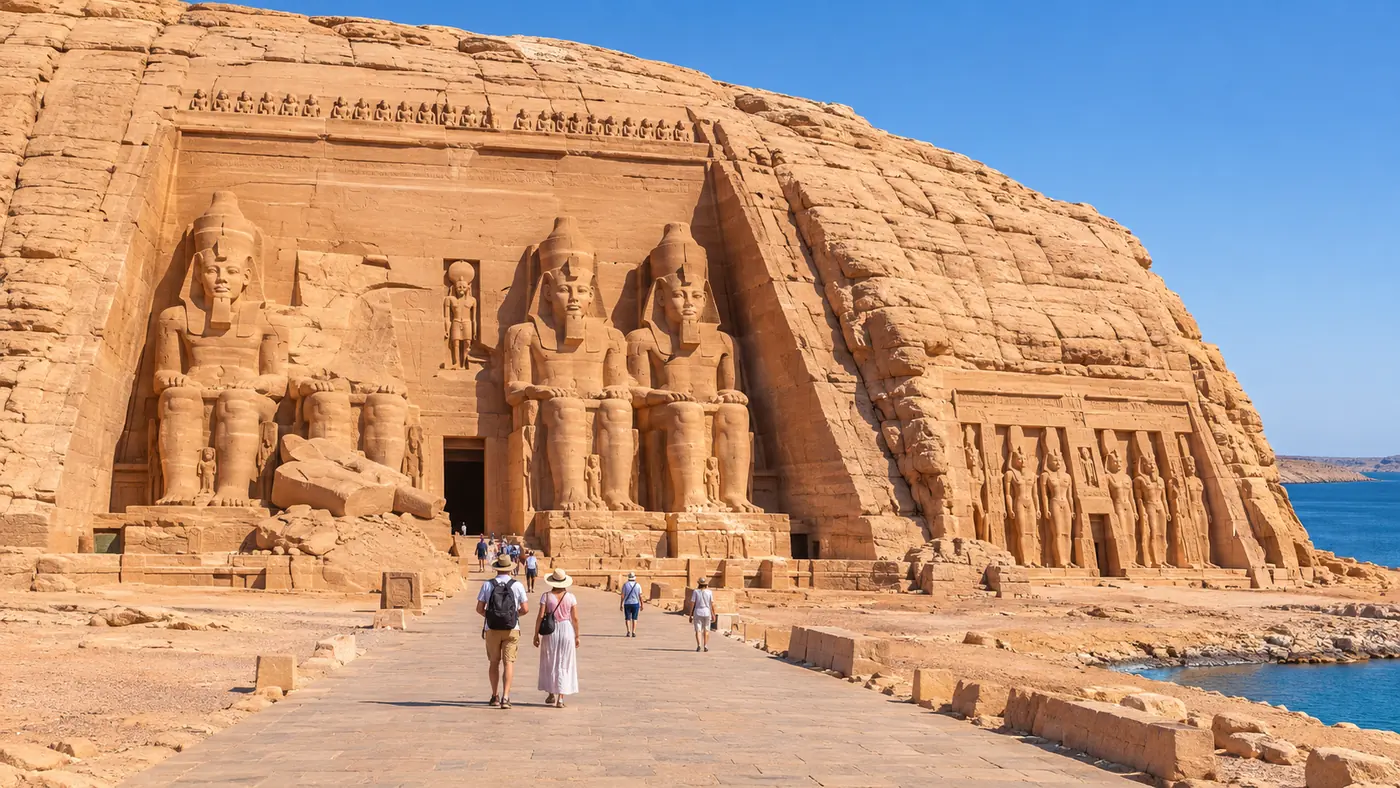
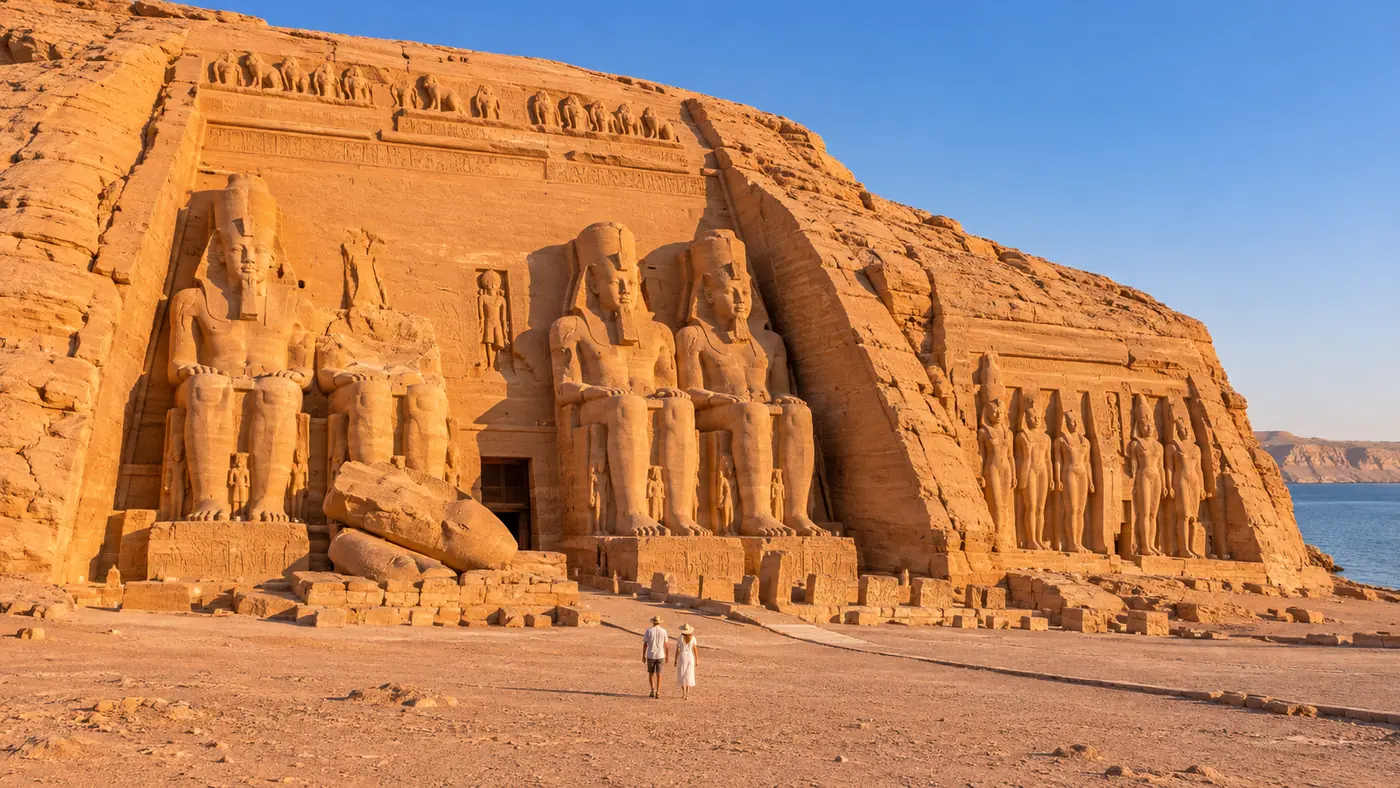
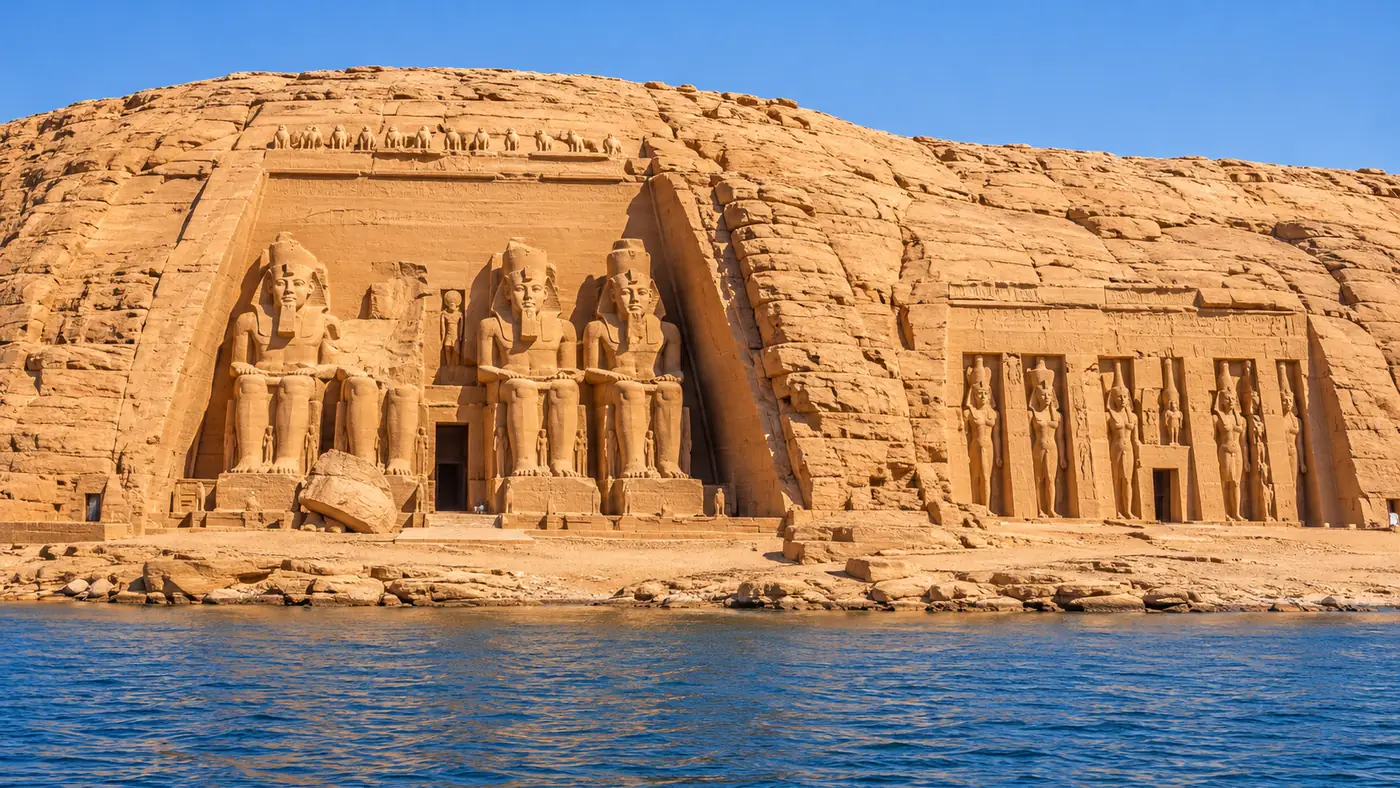
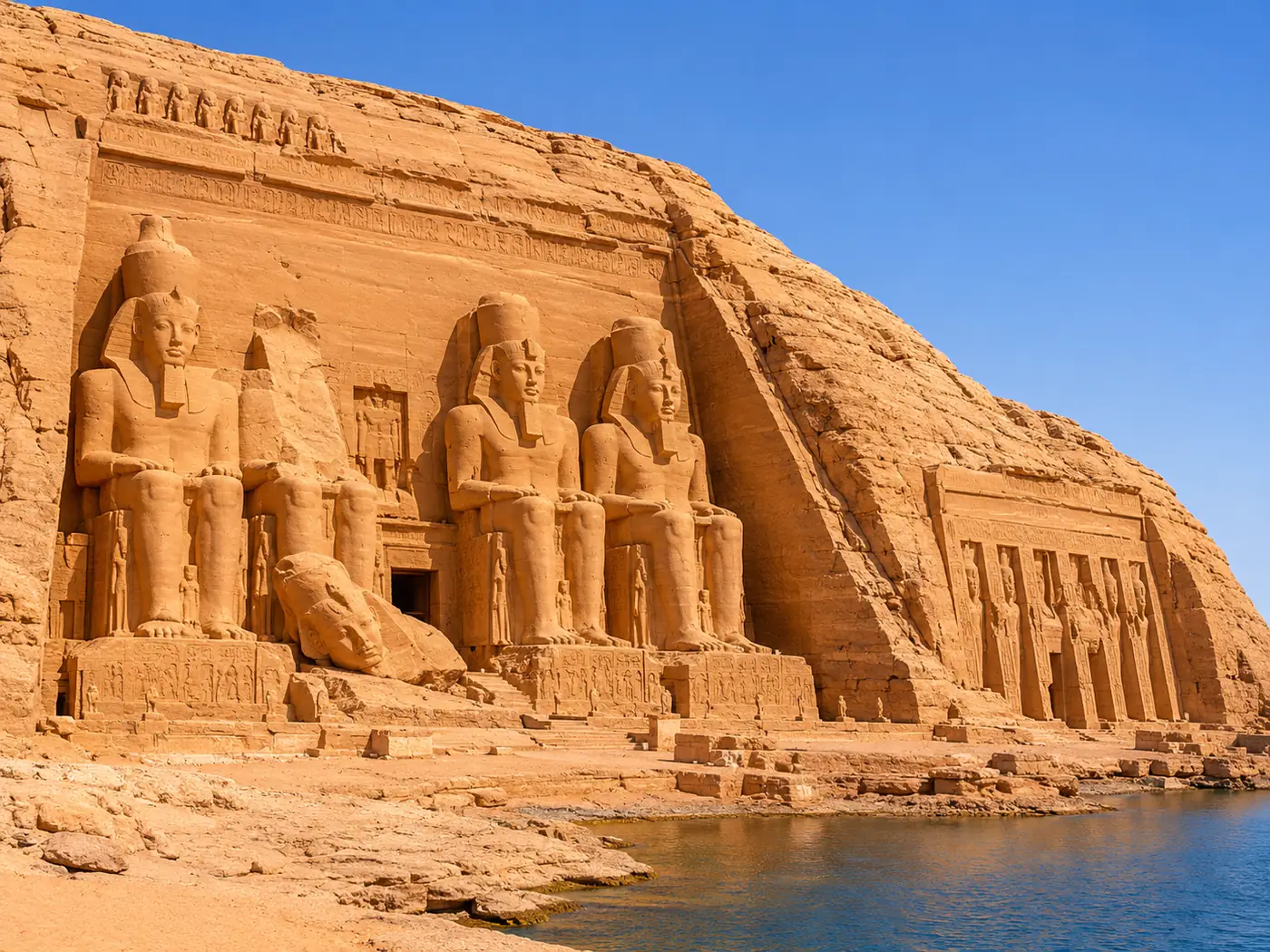
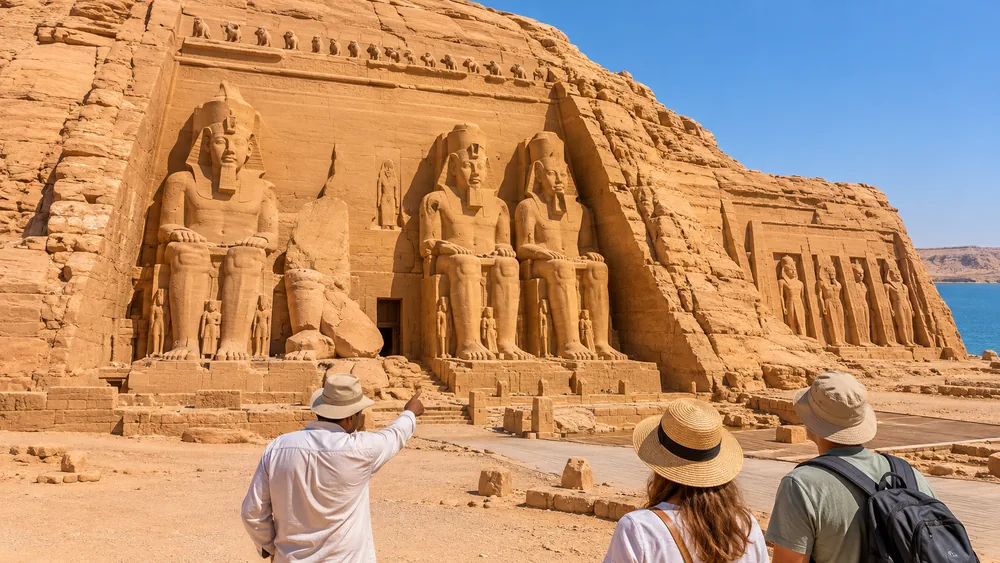
The temples were carved around 1264 to 1244 BC, in the reign of Ramesses II. UNESCO describes the Great Temple as "carved out of an escarpment of solid rock", and that is what you see: four seated colossi of the king on the facade and a run of halls cut straight into the hill behind. Next to it stands a smaller temple for the goddess Hathor and Ramesses' queen, Nefertari.
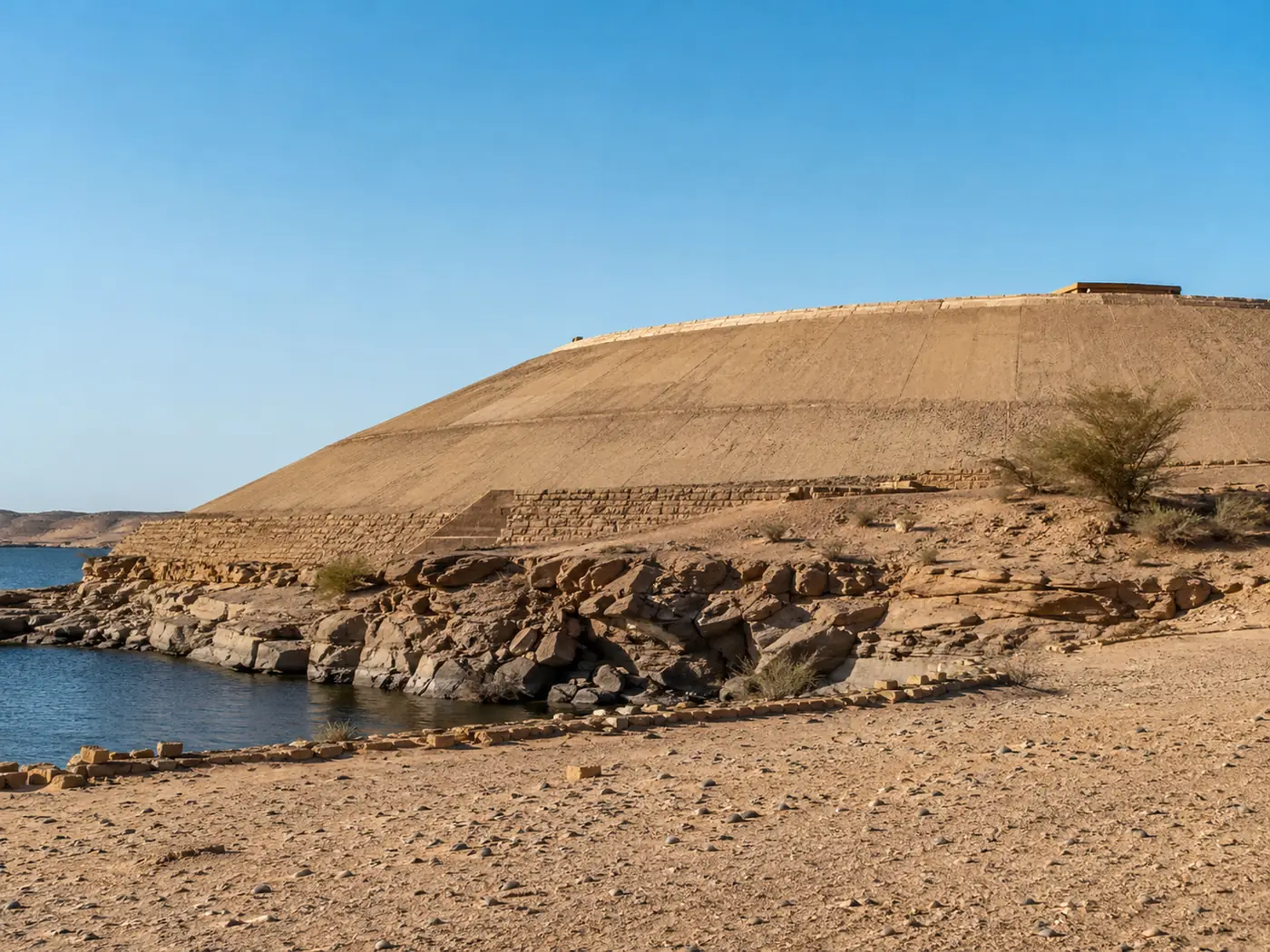
Both sit today about 65 m higher and some 200 m back from where they were built. When the Aswan High Dam created Lake Nasser, an international rescue cut them out of the rock and rebuilt them on an artificial hill. The hill you walk around is part of that story.
The quick answer
There are two temples, both open to visitors and both on one ticket: the Great Temple of Ramesses II, with its four 20 m colossi, and the Temple of Hathor and Nefertari. Inside you see battle reliefs, pillared halls and a sanctuary the sun reaches twice a year. Most tours give you about 2 hours. It is worth it.
Are there two temples at Abu Simbel?
Yes. The Great Temple of Ramesses II and the smaller Temple of Hathor and Nefertari stand side by side, and one entry ticket covers both.
The Great Temple honours Ramesses II together with the gods Amun-Ra, Ra-Horakhty and Ptah. The small temple belongs to Hathor and to Nefertari, the king's great wife. You walk from one to the other in a few minutes along the shore. Prices and buying are in our Abu Simbel tickets guide.
| Great Temple | Temple of Hathor and Nefertari | |
|---|---|---|
| Dedicated to | Ramesses II, Amun-Ra, Ra-Horakhty, Ptah | Hathor and Queen Nefertari |
| Facade | Four seated colossi of the king, about 20 m each | Six standing statues about 10 m high: four of Ramesses II, two of Nefertari |
| Inside | Hall of eight Osiris pillars, Kadesh battle reliefs, sanctuary | Hall of six pillars, Hathor scenes, sanctuary niche |
| Size | Goes about 56 m into the cliff (Britannica) | Smaller and shallower |
What do you see inside the Great Temple of Ramesses II?
A big pillared hall lined with statues of the king as Osiris, walls carved with the Battle of Kadesh, a second hall and, at the very back, the sanctuary with four seated gods.
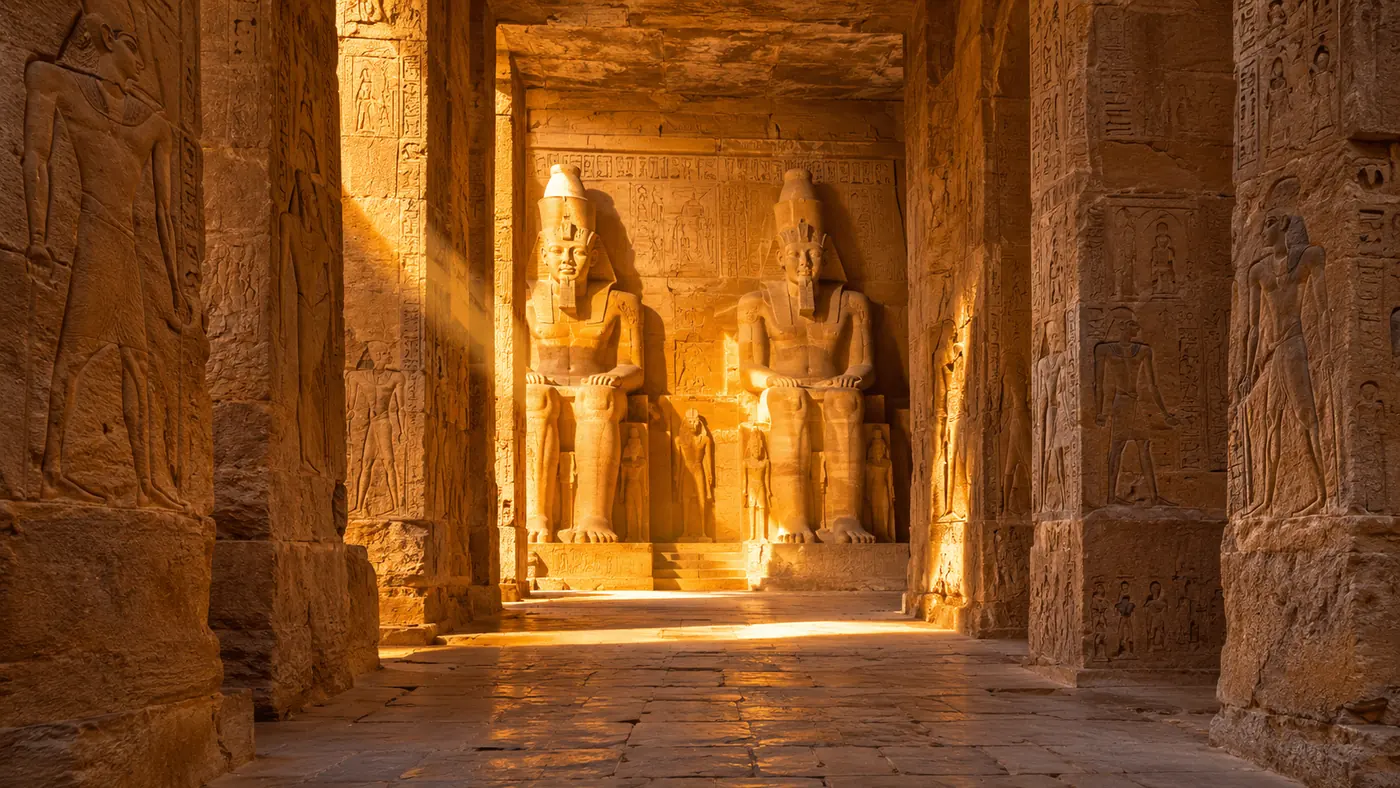
Walk past the colossi and you are in the hypostyle hall, about 18 m long, held up by eight huge pillars showing Ramesses as the god Osiris (Wikipedia). The walls are where people slow down. Most of the carving tells the story of the Battle of Kadesh against the Hittites, in present-day Syria, and the best-known scene shows the king in his chariot shooting arrows at a fleeing enemy. Other scenes show campaigns in Libya and Nubia.
Beyond a second, smaller hall of four pillars lies the sanctuary, with seated statues of Ramesses II, Amun-Ra, Ra-Horakhty and Ptah. On 22 February and 22 October the rising sun reaches them; Ptah, linked to the underworld, stays in the dark. Outside, look for the colossus just left of the entrance: an earthquake broke it long ago, and its head and torso still lie at its feet. Smaller figures of Nefertari and the royal children stand by the king's feet.
What is inside the Temple of Hathor and Nefertari?
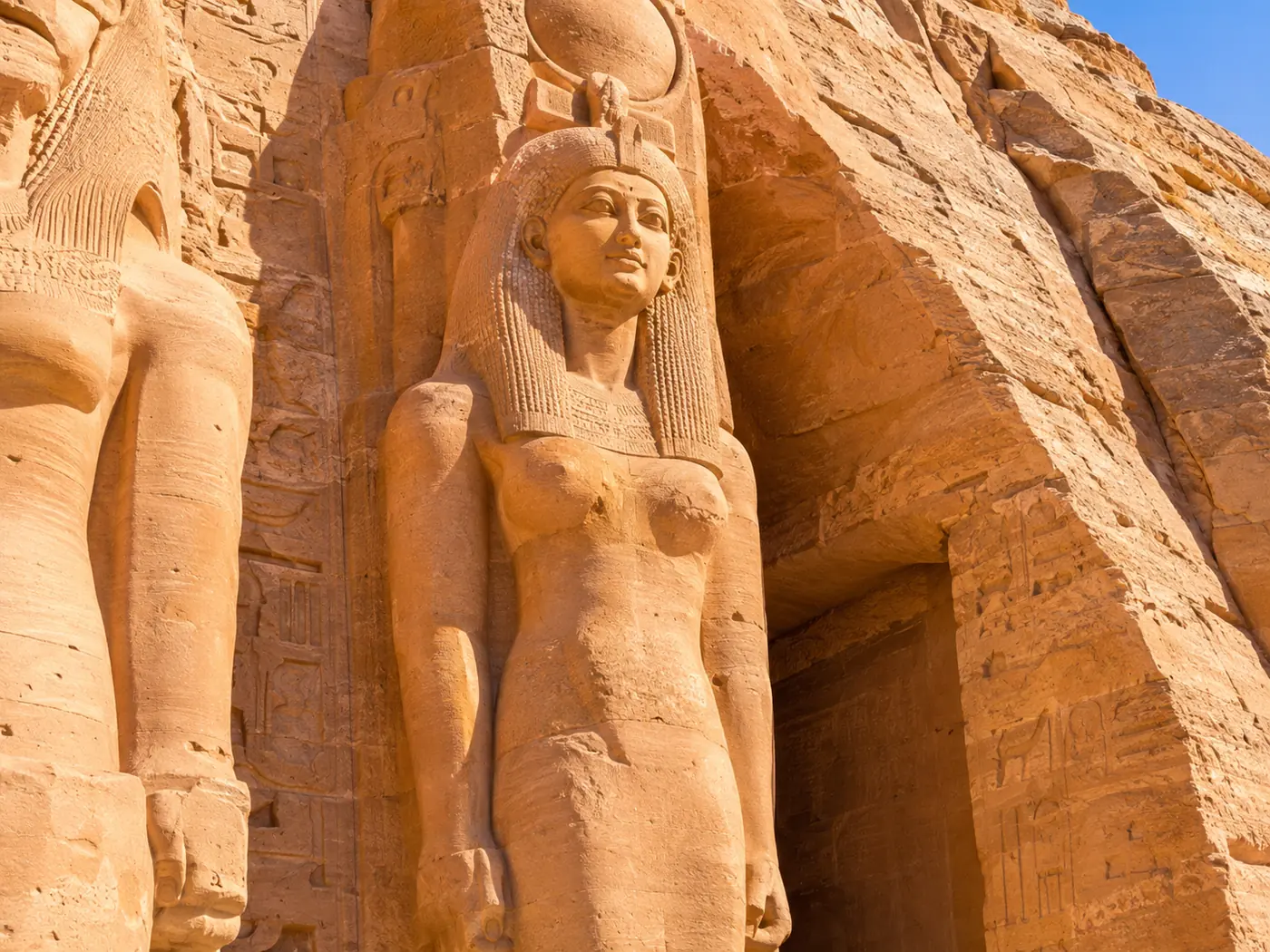
A hall of six pillars carved with the queen and the goddess Hathor, a vestibule with Hathor as a cow on a boat, and a sanctuary where she seems to step out of the rock.
On the facade, six standing statues about 10 m high flank the door: four of Ramesses II and two of Nefertari. Inside, the pillars are not Osiris figures as in the big temple but carry scenes of the queen playing the sistrum, the rattle sacred to Hathor, with gods and goddesses around her (Wikipedia). In the vestibule, the king and queen offer papyrus to Hathor, shown as a cow on a boat in the reeds. At the back, in the sanctuary niche, the cow goddess appears to come out of the mountain.
We like to see it first, while the groups head for the big facade.
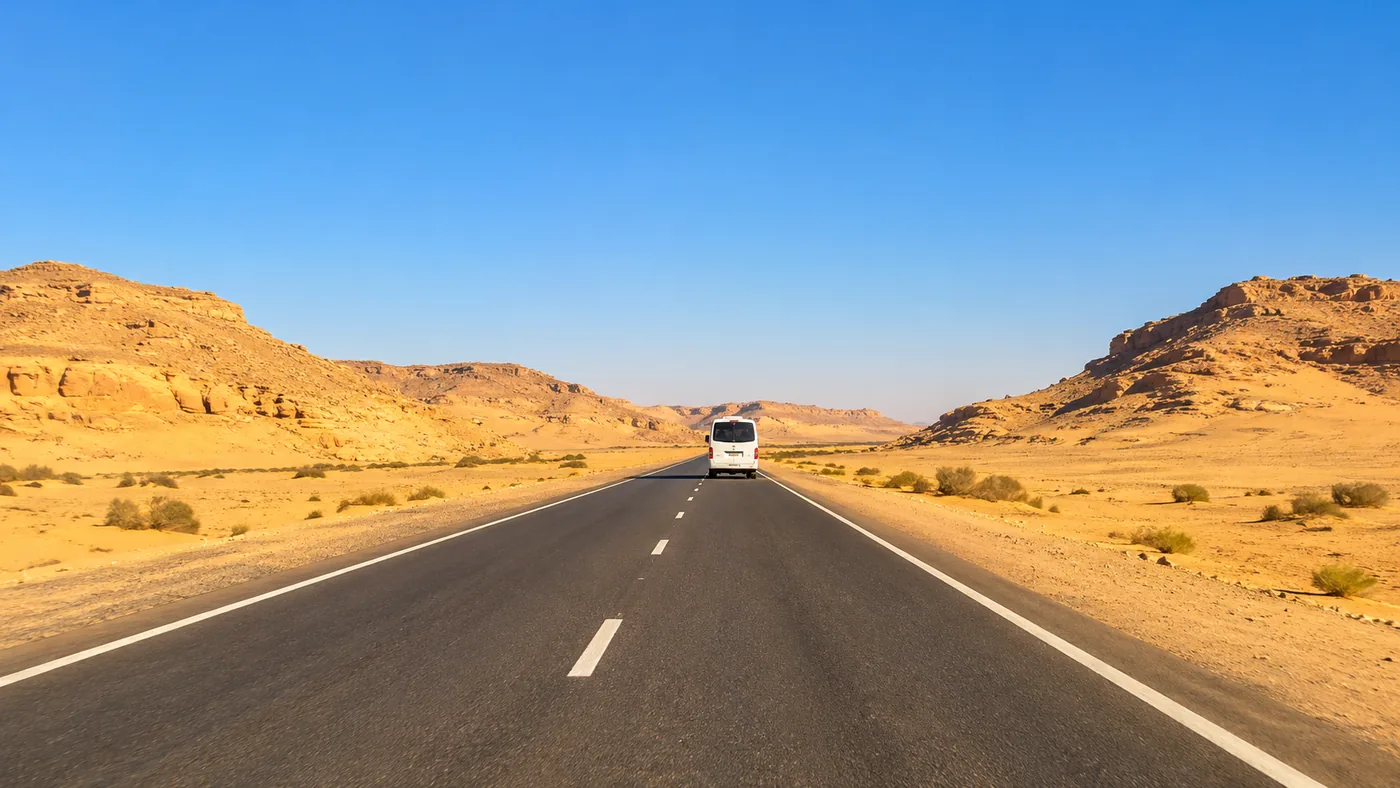
Your own guide for the day: a private car from Aswan, the ticket included, and time to see both temples properly.
Check dates for the private tour from AswanCan you go inside the Abu Simbel temples?
Yes, both of them, all the way to the sanctuaries. Guides usually brief you outside, and inside you explore on your own.
The halls are lit, and you can walk to the back of each temple. Expect it to be stuffy inside, more so later in the day. Photos with your phone are free; no flash. Most tours allow about 2 hours on site, enough for both temples, the walk along the shore and the view of the artificial hill from behind.
★★★★★the guide saved us time out of the sun by explaining a lot of the history in the van on the way there, with diagrams and photos. lots of time to explore
Why were the Abu Simbel temples moved?
To save them from Lake Nasser. The Aswan High Dam would have put them under some 50 m of water, so between the mid-1960s and 1968 they were cut into blocks and rebuilt about 65 m higher.
The rescue was part of UNESCO's International Campaign to Save the Monuments of Nubia, which ran from 1960 to 1980. Engineers sawed both temples into more than 1,000 huge blocks (Wikipedia's count), lifted them and reassembled them some 200 m back from the river. The work was completed in 1968, and Wikipedia puts the cost at USD 41.7 million, shared between Egypt and dozens of countries.
The cliff you see behind the temples is not a cliff. It is an artificial hill over concrete domes, built from rock removed from the original site, and you can see the dome from behind. The engineers kept the solar alignment too, the AP reported in October 2026, so the sun still reaches the sanctuary on the two festival days. Philae, near Aswan, was moved to Agilkia Island in the same campaign; the Philae half day makes a good second temple on your Aswan stay.
A private car, driver and English-speaking guide from Aswan, with the entry ticket included and no group to keep up with at the temples.
Explore the private tour from Aswan Tour detailsWhy is Abu Simbel so special?
Scale, the sun and the rescue: 20 m colossi cut from a cliff, a sanctuary lit by the sun twice a year, and a whole temple moved up a hill in the 1960s.
UNESCO lists Abu Simbel in the World Heritage property "Nubian Monuments from Abu Simbel to Philae" and counts these temples among the "masterpieces of human creative genius". The facade alone is about 33 m high, with a frieze of baboons greeting the rising sun along the top.
Then there is the light. On 22 February and 22 October a beam reaches about 60 m into the Great Temple and lights the sanctuary statues for some 20 minutes. The dates are traditionally linked to Ramesses II's birthday and coronation. And the place has a story of its own: buried in sand for centuries, it was rediscovered by Johann Ludwig Burckhardt in 1813, and Giovanni Belzoni's party dug into the Great Temple in 1817. The sun days are covered in our Sun Festival guide.
What is the most beautiful temple in Egypt?
There is no single answer. Abu Simbel wins on scale and setting, Philae on its island, and the temples of Luxor and Karnak on sheer size and history.
It depends what you like. Abu Simbel is the one for colossal statues and a desert lake. Philae, the temple of Isis on Agilkia Island near Aswan, is reached by boat and feels calm and contained. In Luxor, Karnak and Luxor Temple are the big set pieces of the Nile Valley. Many trips combine Aswan and Luxor and see all of them; the 4-day Nile cruise sails from Aswan to Luxor with the Abu Simbel trip on day 2.
Is Abu Simbel worth it, and what else is there to do?
Yes. Even after a 4am start, we think it is the high point of southern Egypt. Beyond the temples there is the evening show, Lake Nasser and the Nubian lodges.
What to do in Abu Simbel:
- Both temples, slowly, with time for the reliefs.
- The sound and light show, the only way to see the temples at night: shows listed at 7pm and 8pm in 2026, USD 20 per adult, run when at least 10 foreign visitors book.
- Lake Nasser at sunset, from the shore or a felucca.
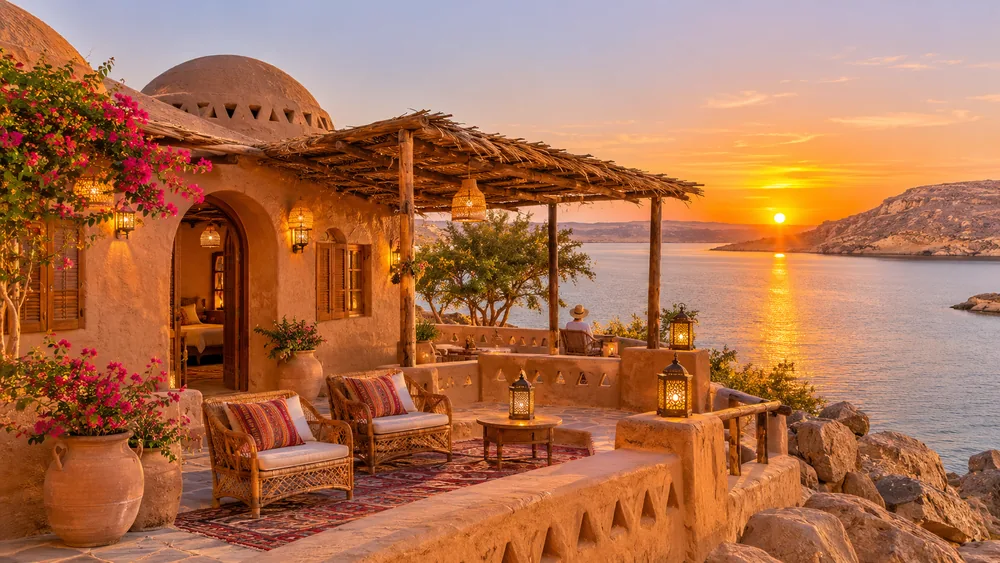
- A night in a Nubian-style lodge, then the temples at 6am before the road tours arrive.
A night there is the slow version; the 2-day private tour covers it.
★★★★★my guide gave me the history about the temple that increased my appreciation of the tremendous task by UNESCO.
A night by Lake Nasser: two private days from Aswan with the ticket, a guide and a felucca ride.
Check dates for the 2-day tour with a night in Abu SimbelFrequently asked questions
How much time do you need at Abu Simbel?
About 2 hours covers both temples, which is what most tours allow. Allow 3 if you like to read every wall, or stay the night for an early or late visit.
Can you visit Abu Simbel at night?
Only for the sound and light show, listed at 7pm and 8pm in 2026 (USD 20 per adult). Daytime entry runs from 6am, with last entry at 4pm.
Who built Abu Simbel?
Pharaoh Ramesses II, who had both temples carved around 1264 to 1244 BC: the Great Temple for himself and the gods, the smaller one for Hathor and his queen, Nefertari.
Is Abu Simbel safe to visit?
Visitors go every day with licensed tours. The UK Foreign Office lists Aswan and Abu Simbel as exceptions to its Western Desert warning; the US advisory rates Egypt Level 3 and does not single out Abu Simbel.
Ready to book
Choose your tour
Free cancellation up to 24 hours before on every option. Prices are from-prices in USD and move with the season.
Abu Simbel Private Tour from Aswan
- Hotel pickup and drop-off in Aswan
- Private air-conditioned car
- Private English-speaking guide

Abu Simbel Day Trip from Aswan
- Hotel pickup and drop-off in Aswan
- Air-conditioned transport and driver
- Entry ticket if that option is booked
Abu Simbel 2-Day Private Tour with Felucca
A night by the lake and the temples without the rush